
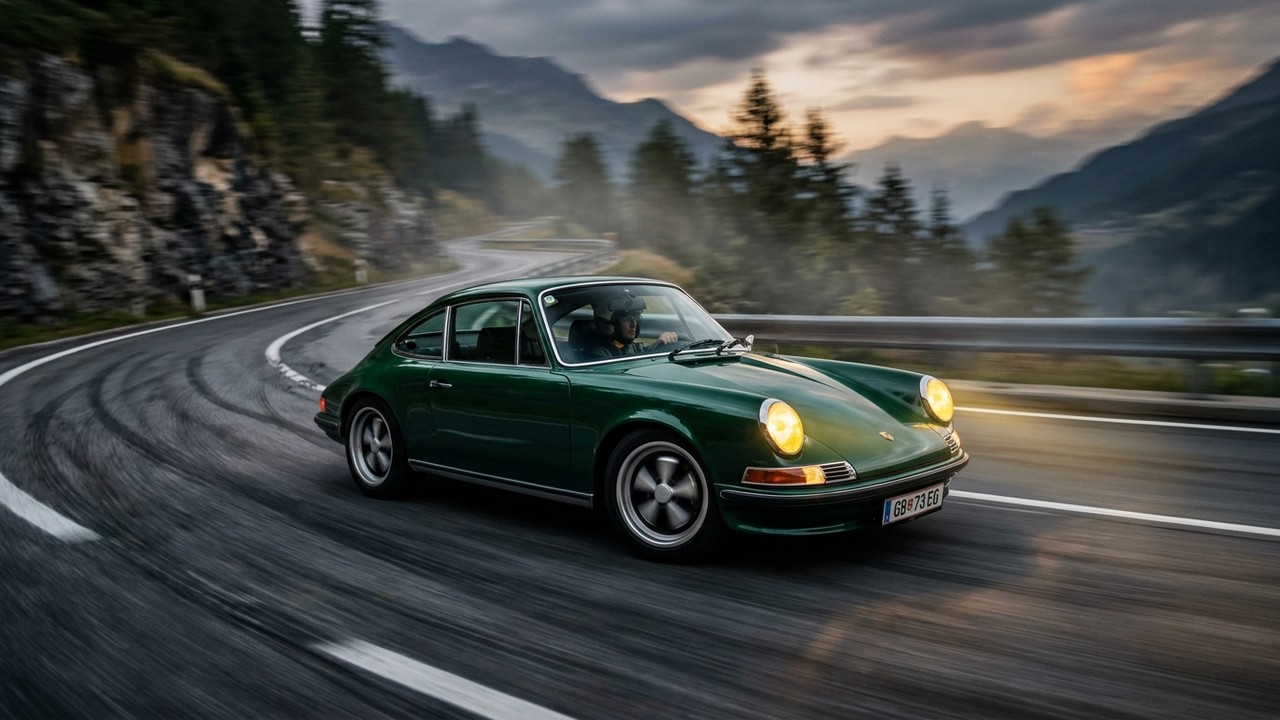
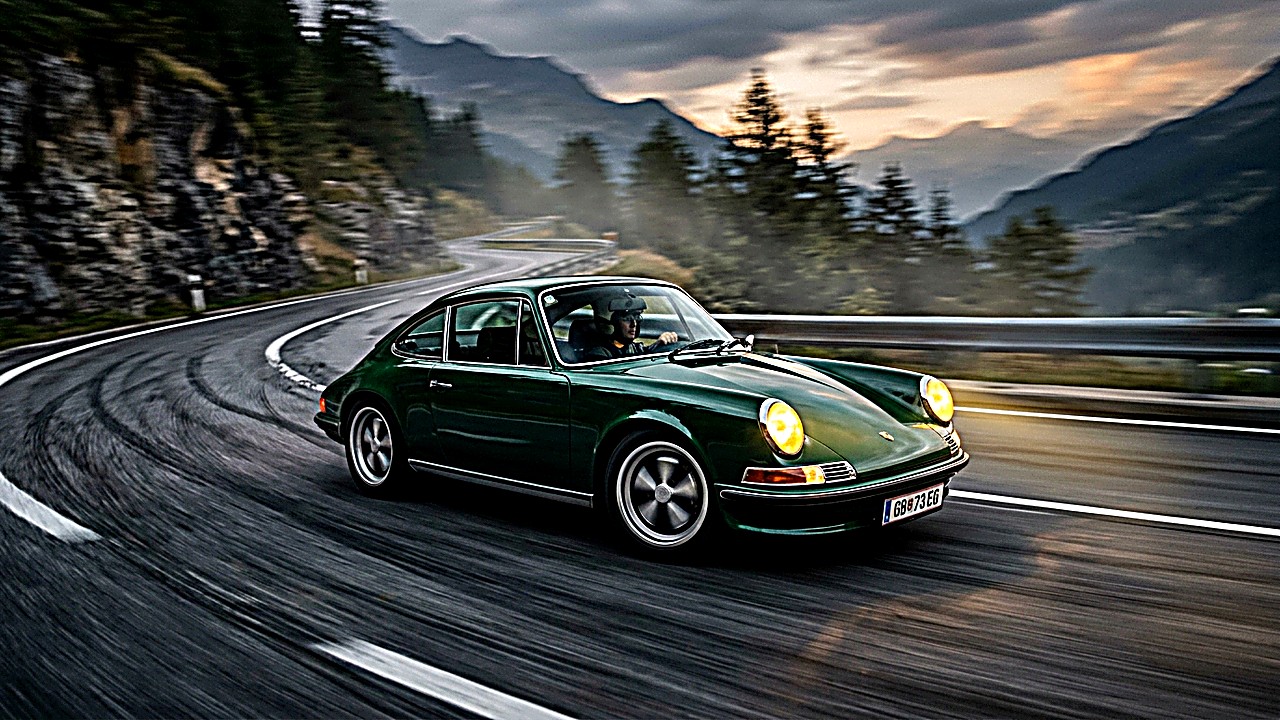
The Rotary Shutter Legacy: From Film Gates to Digital Sensors
In mechanical motion picture cameras (such as the ARRI 535 or Panavision Millennium), film stock was physically pulled down through the gate by claw pins. While the film was in motion, a spinning semicircular mirror disk—the rotary shutter—blocked light from hitting the emulsion. A semicircular disk covers exactly 180 degrees of a 360-degree circle.
For half the rotation, light exposed the film frame; for the other half, light was blocked while the claw pulled the next unexposed frame into position. This mechanical reality established the universal cinematic motion blur cadence that the human brain has associated with storytelling cinema for over a century.
The Mathematical Formula: Angle vs Speed
The relationship between shutter angle (theta), frame rate (fps), and exposure time (T in seconds) is defined by:
T = θ / (360 × FPS)
At standard 24 frames per second, a 180° angle yields T = 180 / (360 × 24) = 1/48s. If you shoot at 48fps, a 180° angle automatically yields 1/96s. The ratio of exposure time to dark time remains constant at 1:1, producing consistent visual rhythm across both real-time dialogue and high-speed slow motion.
If you shoot at 24fps with a fast shutter like 1/500s (equivalent to a 17.28° shutter angle), fast-moving objects have zero motion blur. Instead of a smooth stroke, moving hands and wheels appear as disconnected, strobe-like frozen slices. Unless used intentionally for violent action scenes, this destroys the filmic aesthetic.
Shutter Angle Creative Matrix & Field Applications
How varying shutter angles alter emotional perception and motion rendering:
| Shutter Angle | Equivalent Speed (24fps) | Visual Characteristic | Iconic Film Reference | Best Scenario |
|---|---|---|---|---|
| 45° | 1/192 sec | Ultra-crisp, explosive, zero blur | Saving Private Ryan (D-Day Landing) | Dirt bursts, muzzle flashes, combat |
| 90° | 1/96 sec | Tight staccato, heightened tension | Gladiator (Colosseum battles) | Martial arts, intense foot chases |
| 180° (Golden Rule) | 1/48 sec | Natural organic cinematic blur | Hollywood Standard (95% of films) | Dialogue, narrative, emotional drama |
| 270° | 1/32 sec | Fluid, slightly dreamy motion | Wong Kar-wai (In the Mood for Love) | Nighttime streetwalks, mood pieces |
| 360° (Full Open) | 1/24 sec | Heavy motion smear, painterly | Chungking Express, Fight Club | Drug sequences, disorientation, low light |
Solving 50Hz / 60Hz Light Flicker with Fractional Angles
Modern LED and fluorescent fixtures oscillate with the alternating current (AC) grid. When filming in 50Hz power regions (UK, Europe, Australia, parts of Asia) at 24fps, a standard 180° shutter (1/48s) drifts through phase shifts, producing distracting light flicker. Professional cinema cameras (ARRI Alexa, RED, Sony Venice) include calibrated fractional shutter angle presets:
In 50Hz regions: Shoot 24fps at 172.8° (exactly 1/50s) to lock onto the 50Hz cycle.
In 60Hz regions: Shoot 25fps at 150.0° (exactly 1/60s) or 24fps at 144.0° (exactly 1/60s).
High Frame Rates: 60fps, 120fps, and Slow Motion Shutter Calculation
When shooting high frame rates for over-cranked slow motion, maintaining the 180-degree shutter is vital. At 120fps, a 180° shutter produces an exposure time of 1/240s. When played back at 24fps (a 5x slow down), the motion blur stretches proportionately, creating ethereal, buttery slow motion rather than rigid plastic movement.
Pertanyaan yang Sering Diajukan
What is the formula to convert Shutter Angle to Shutter Speed?
The mathematical formula is: Shutter Speed = Shutter Angle / (360 × Frame Rate). For example, at 24fps with a 180° shutter angle: 180 / (360 × 24) = 1 / 48 of a second. At 60fps with a 180° shutter: 180 / (360 × 60) = 1 / 120 of a second.
Why is Shutter Angle preferred over Shutter Speed on cinema cameras?
When shooting with shutter speed, if you switch your camera from 24fps to 60fps for slow motion, you must manually calculate and change your shutter speed from 1/48s to 1/120s to maintain proper motion blur. When using shutter angle, the camera locks at 180°, automatically adjusting exposure time proportionally no matter what frame rate you choose.
How does shutter angle solve artificial LED and fluorescent light flicker?
Electrical power grids alternate at either 50Hz (Europe, Asia) or 60Hz (North America). If you shoot 24fps in a 50Hz region at a standard 180° shutter (1/48s), your exposure drifts across electrical cycles, causing pulsing flicker. Setting a fractional shutter angle of 172.8° creates an exact 1/50s exposure time, perfectly synchronizing with the electrical cycle.
Unduh LUT Gerak Sinematik
Kurva kontras yang dirancang selaras dengan vektor motion blur dan butiran film organik.